 Oh-My-Note
初级语法
词性简介
| 名称 | 解释 | 例句 |
|---|---|---|
| 名词 [n] | 分可数名称(Countable nouns)和不可数名称(UnCountable nouns) | ship,people |
| 冠词 [art] | 用于放在名词前面 | a,an,the 三个 |
| 形容词 [adj] | 用来修饰名词 | strict 严厉的 early 早 |
| 动词 [v] | 表动作,状态,分及物动词【vt】和不及物动词【vi】 | go,sing,die,rain,be,have,know,happen |
| 副词 [adv] | 修饰动词、形容词,副词,短语和句子 | I never get up early on weekends |
| 介词 [prep] | 连接单词,用来显示关系 | the apple on the desk |
| 连词 [conj] | 连接单词、短语、句子 | There are seats outside but ... |
| 代词 [pron] | 代替名词 | I don’t konw,it’s for you |
a white ship sails slowly in the sea and some people on it。
a ——冠词
white —— 形容词
ship —— 名词
sails —— 动词
slowly —— 副词
in —— 介词
and —— 连词
it —— 代词
名词[n]
名词按照是否首字母大小写可分为:
- 普通名词 common nouns :river、friend、mother-in-row
- 专有名词 proper nouns : Tom,New York
名词按照数量化可以划分为:
- 可数名词 countable,特点是数量可数,并且有复数形式
- 不可数名词 uncountable,特点是不可数,比较抽象,本身是无复数形式,如果想体现复数则需要加量词。
常见可数名词例如:ship,people 等都是表示可数的,可数名词一般有复数形式:
boy——boys
table —— tables
country —— countries
child —— children
不可数名词例如:
water、furniture、petrol、information
有一些单词在某些语义上是可数的,在某些语义上是不可数的,比如:smoke,作为烟雾的意思是不可数的,作为抽烟(这种行为)是可数的。
名词复数形式变化规则
-
大部分单词可以直接加
scars、books、mothers-in-row
-
以
s、x、z、ch、sh结尾的加esbox - boxes、class - classes、quiz - quizzes
-
辅音字母 + y 的名词,改
y为i,再加esBaby - babies、family - families
-
以
f、fe结尾的,去掉f/fe,改为v再加esknife - knives、life - lives、wife - wives
-
以辅音字母 + o 结尾的,复数加
eshero - heroes、potato - potatoes
例外:
piano - pianos 、halo - halos、photo - photos
-
不规则的复数形式
child - children、foot - feet、people - people、sheep - sheep
不可数名词
不可数名词借助量词可以达到复数的表达效果:
1 cup of coffee
5 cups of coffee
在口语中可以省略量词。
经常弄错的不可数名词
Information 信息,消息
research 表示抽象的研究时是不可数的,而表示实体的研究(资料、论点)等时是可数的 researches
capital 表示资本时是不可数的,表示首都时是可数的 capitals
pollution 污染物
knowledge 知识
software 软件
news 新闻
architecture 表示抽象的建筑(风格、设计)是不可数的,表示建筑物时是可数的 architectures
equipment 设备、装备
furniture 家具
education 表示抽象的教育时是不可数的,表示教育机构 educations
experience 表示经验时事不可数的,表示经历时可数 experiences
life 表示人生时不可数,表示生命时可数 lives
love
time
advice
由于不少名词是既可数又不可数的(不同的语义环境下),所以当名词复数形式不清楚时,需要查看字典以及例句。
例句
Yesterday, I caught two thieves.
what happend?
They each carried a knife,ripped some furniture but stole nothing.
well,according to my experience,I’d like to give you some advice.
Go head
Get house insurance
冠词[art]
冠词一共三个,a,an,the,放在名词前面使用。
a 和 an 的差别在于元音发音开头的单词需要用 an,非元音发音开头的单词则是 a。
比如 an uncertain,a university
the 有两种读音,后面接元音发音开头的单词念 /ði/,非元音发音开头的单词念/ðə/。
比如 the apple 就需要念/ði/
the books就念/ðe/
基本原则
-
the:你知道我指哪一个(特指)
例如:Could you please pass me the salt
-
a,an:你不太知道我指的是哪一个
例如:I need a help
-
零冠词:你不太知道我指的是哪一个
例如:I need help
a,an
-
加可数名词单数,表示一个/只/位
I have a question.
Do you have a car?
-
加不可数名词,表示一种/类
Difference is a power
You’ve been a great help
a和an的区别在于是否后面跟着元音发音开头的单词,注意:元音发音开头并不等于 A、E、I、O、U 这几个元音字母开头的单词。
例如:
an applle
an hour
an old car
a university
the
-
加可数名词单数 - 用来特指某一个/类/种
Have you seen the cat?
The cat is a smart animal
-
加可数名词复数 - 用来特指某一个/类/种
The stars are really bright tonight
The Romantic poets
-
加不可数名词 - 用来特指某一个/类/种
The sun
The government
The first stage 第一阶段
零冠词
-
加复数名词(不特指的情况下大部分用法)
There are cats in every room
-
加不可数名词
I need information
-
其他
-
kind of,sort of,number of
The number of
themoney -
日、月、季节
See you on
theThursday -
双词组
day after
theday -
所有格
theTom’s coat
-
零冠词与 the
| 零冠词 | the |
|---|---|
| 在某地做该做的事情 | 在某地 |
| in hospital 住院 | in the hospital 在医院 |
| at table 吃饭 | at the table 在桌边上 |
| go to bed 睡觉 | go to the bed 去床边 |
| in school 上学 | in the school 在学校 |
| in office 工作 | in the office 在办公室 |
例句:
Where is tom?
He is in school
And where’s his sister?
She is in the school
what for?
She is a teacher
Oh, I see
小结
| 零冠词 | 可数名词复数、不可数名词 | 特指/泛指 需要根据语境 |
| the | 可数名词单数、复数、不可数名词 | 特指 |
| the | 形容词,例如:the rich(富人) | 泛指 |
| a/an | 可数名词单数、不可数名词 | 无特指 |
代词[pron]
代词的作用是替代名词。
I don’t know,it’s for you.
代词分主格和宾格,主格指的是我做的,宾格指的是作用在我身上的。
主格宾格
| 主格 | 宾格 |
|---|---|
| I 我 | me |
| you 你 | you |
| he/she/it TA | him/her/it |
| we 我们 | us |
| you 你们 | you |
| they 他们 | them |
| my 我的 | mine |
| your 你的 | yours |
| her/his/its TA 的 | hers/his/its |
| our 我们的 | ouers |
| your 你的 | yours |
| their TA 们的 | theirs |
例句:
- We really appreciate all the help you gave us last weekend.
- The book is mine
- This is my book
- Here’s my car,where’s theirs
- Give that book to me
I and SarahSarah and I went for coffee
所有格
所有格指的是代指谁的
Jack’s brother
My mother’s car
The dog’s tail
My friends’ cars
The children’s toys
代指本身
| 单数 | 复数 |
|---|---|
| yourself | yourselves |
| myself | ourselves |
| himself/herself/itself | themselves |
You tell yourself everything’s all right but you know it’s not true
If you not trust me you’d better go yourself
It 代指人
it 一般是指代非人或非生命。
但是也有指人的两种情况:
-
不知道性别
What wil you call it if it’s a boy
-
表明某人是谁
who’s that over there
It’s Robert
代指这和那
| 单数 | 复数 |
|---|---|
| this | these |
| that | those |
This is my car
These are my cars
I like that book
Those books are mine
不定单词
another, anybody, anyone, anything
each, either, everybody, everyone, everything
neighter, nobody, no one, nothing
somebody, someone, something
one, other
以上所有不定单词的出现后面都跟第三人称单数的动词。
A classic is something that everybody wants to have read and nobody wants to read
所有人都
everyone、everybody
Everyone wants to achieve their personal goals in life
每个人都想要达到他们的人生目标
对话例句
A: What’s wrong with you?
B: I’m really upset,Do you know Juli,my girlfriend?
A: Yes,everyone knows her
B: She broke up with me
A: There are plenty of fish in the sea
动词[verb]
动词分及物动词[vt]和不及物动词[vi],动词主要用来表示动作,状态和事件等。
- Actions: go,sing
- Events: die,rain,happen
- Status: be,have,know
动词的五大变化规则
| 动词原型 | 不定式 | 第三人称单数 | 现在分词 | 过去式 | 过去分词 |
|---|---|---|---|---|---|
| do | to do | does | doing | did | done |
第三人称单数变化规则
他、她、它、TA 们指的是第三人称。
第三人称单数后面加动词需要让动词做一些变形:
She
havehas a book。
第三人称单数的变化规则跟名词的复数形式非常类似:
-
大多数动词词尾可以直接加 s
stop - stops、make - makes
She makes cupcakes every day。
-
以辅音字母加 y 结尾的,改 y 为 i,然后加 es
fly - flies、study - studies、worry - worries
My mom always worries about me。
-
以 s、x、sh、ch 结尾的,在词尾直接加 es
teach - teaches、watch - watches
She watches TV every night。
-
以 o 结尾的动词,直接加 es
does
-
be 动词变化规则
原型 不定式 第三人称单数 现在分词 过去式 过去分词 be to be is being was/were been She is a teacher 她现在是老师
She was a teacher 她曾经是老师
She is going to be a teacher 她即将成为老师
动词的现在分词变化规则
-
一般在动词末尾直接加 ing
do - doing、see - seeing
-
以不发音字母 e 结尾的动词,先去掉 e,再加 ing
skate - skating 、have - having
-
以 ie 结尾的动词,把 ie 变成 y 再加 ing
lie - lying
动词的过去式、过去分词变化规则
之所以将过去式、过去分词放在一起,是因为大部分情况下,过去式和过去分词是一样的。
-
一般动词原型后加 ed
look - looked - looked
-
以 e 结尾的动词直接加 d
move - moved - moved
-
以辅音字母加 y 结尾的动词,变 y 为 i,再加 ed
study - studied - studied
-
以元音字母加 y 为结尾的,直接加 ed
play - played - played
-
以 r 音节结尾的,双写 r 再加 ed
prefer - preferred - preferred
对话例句
A:Juli,do you know what Tom’s job is ?
B:He works as a waiter at Pizza Hut .
A:what did he do before ?
B:He was a waiter at Burger King .
A:How long had he worked there?
B:I have no idea .
形容词[adj]
形容词(adjective)用来修饰名词,有些单词既可以用作形容词,也可以用作副词。
例如:
early
—— 提早(副词)You left early this morning.
—— 早期的(形容词)This is very early!
形容词的作用
-
放在名词前,修饰名词,做定语
The new teacher doesn’t like me
-
在句子里面当表语
She is beautiful
其中,she 是主语,is 是系动词 beautiful 是表语
-
注意:something、anything、nothing、everyone、no one 等不定代词,形容词需要放到它们的后面。
There is something wrong with the phone
认识形容词
-
一般形容词
good、active、beautiful、reasonable(有理由的,公平的)、cold-hearted(冷血的)、five-year-old(五岁的)
-
数词+名词
a five-year-old boy 一个五岁大的男孩
a four-hour trip 一段四小时的旅途
an 800-meter-long bridge 一座 800 米长的桥
-
形容词+名词 — ed
a warm-hearted woman 一位热心的女士
two-middle-aged men 两位中年男士
a near-sighted boy 一个近视的男孩
-
形容词+动词 -ed/-ing
an easy-going man 一个随和的男士
an ordinary-looking man 一位相貌普通的男士
ready-made goods 现成的货物
-
副词+动词 ed/动词 ing
a well-known singer 一位知名的歌手
hard-working people 努力工作的人们
-
名词+分词
a man-made satellite 一位知名的歌手
a snow-covered hill 一座覆盖了雪的山
-
形容词+名词
a full-time job 一份全职的工作
Second-hand material 一份二手的资料
-
形容词+形容词
a grey-green car 一辆灰绿色的车
a deaf-mute boy 一个聋哑男孩
合成词规律
中间有小横杠的:形容词(adj): take-away 可带走的
中间是空格的:动词(v):take away 带走
连在一起的:名词(n):takeaway 外卖
形容词的变化
形容词会有比较级和最高级的变化
-
大部分单词的级别变化,直接+er 或者 est
high ——> higher ——> highest
rich ——> richer ——> richest
small ——> smaller ——> smallest
young ——> younger ——> youngest
-
以 e 为结尾的形容词,直接+r 或者 st
nice ——> nicer ——> nicest
fine ——> finer ——> finest
-
以元音+辅音结尾的形容词,双写辅音+er 或者双写辅音+est
big ——> bigger ——> biggest
hot ——> hotter ——> hottest
-
y 结尾的双音节形容词,改 y 为 i+er 或者改 y 为 i+est
busy ——> busier ——> busiest
happy ——> happier ——> happiest
-
三个或三个音节以上的形容词(元音发音超过 3 个),用 more 或者 most
beautiful ——> more beautiful ——> most beautiful
intelligent ——> more intelligent ——> most intelligent
-
不规则变化
bad ——> worse ——> worst
good ——> better ——> best
far ——> farther/further ——> farthest/furthest
old ——> older/elder ——> oldest/eldest
注意:more/most 后面不要加比较级和最高级
They are looking for a better life ✅
They are looking for a more better life ❎
对话应用
A:I really like my new teacher。
B:What’s she like?
A:She is a nice lady,much more easy-going than the last one。
B:What subject does she teach?
A:English,I feel like that I’m more intersted in English than before。
形容词在句子中的位置
——The order of Adjectives
-
形容词主要用来放在名词前面,修饰名词,做定语。多个形容词放在名词前面,修饰名词时的位置
-
一般情况:表达观点、态度的 adj ——> 描述事实的 adj
一只傻傻的肥猫
a silly fat cat
一栋绝妙的旧房子
a wonderful old house
-
描述事实的 adj ——> 类别
一个绿色的酒瓶子
a green wine bottle
一个新的汽车工厂
a new car factory
-
描述事实时,形容词的次序不完全固定,通常按照大小、年龄、形状、颜色、来源、材料排列
一个小的、圆的、黑色的皮革手提包
a small round black leather handbag
-
-
两个或以上形容词放在名词前面,修饰名词,形容词之间通常用逗号
一个昂贵的、计划不周的、浪费的项目
an expensive,ill-planned,wasteful project
形容词之间通常用逗号,但是短 adj 时,逗号也可以省略
高大、黝黑、英俊的牛仔男孩
a tall,dark,handsome cowboy
a tall dark handsome cowboy
形容词之间不太用 and,但也有例外
一件蓝绿相间的外套
a blue and green coat —— 某物的不同部分
冷热饮料
Hot and cold drinks —— 某物的不同种类
-
在句子里面当表语时,两个或两个以上的形容词,通常在最后一个 adj 前面加 and
她年轻貌美
She is beautiful and young
他高大、黝黑并且英俊
He is tall,dark,and handsome
这件外套看起来温暖、经典并且昂贵
This coat looks warm,classic and expensive
-
形容词当宾补时,放在宾语后面
我会把车准备好
I’ll get the car ready
让我们把厨房粉刷成黄色的吧
Let’s paint the kitchen yellow
比较:
让我们把厨房刷成黄色的
Let’s paint the kitchen yellow —— yellow 是宾补
让我们粉刷这黄色的厨房
Let’s paint the yellow kitchen —— yellow 是定语
对话应用 2
A: It’s so cold outside.
B: Do you want something to drink ?
A: That would be great ! Can I have a cup of coffee.
B: Yes.What coffee would you like ?
A: A hot strong black coffee . Thanks .
副词[adv]
副词用来修饰动词、形容词、副词、短语和句子。
中文里:飞快地跑、慢慢地走。对应英语里就是副词
例句:
- I never get up early at the weekends.
- It's rather cold,isn't it?
- I'm always ...
副词的作用
-
修饰动词(最主要的作用)
sit quietly
安静地坐着
-
修饰形容词
She is a quite clever girl
她是一个十分聪明的女孩
-
修饰副词
Tom walks incredibly slowly
Tom 走得相当慢
-
修饰短语/句子
Personally, I don’t like the plan
个人而言,我不喜欢这个计划
副词有哪些
-
在形容词的基础上变形——直接加 ly
adjective adverb calm 平静的 calmly 平静地 beautiful 漂亮的 beautifully 漂亮地 extreme 极端的 extremely 极端地 -
在形容词的基础上变形——改 y 为 i + ly
adjective adverb easy 容易的 easily 容易地 lucky 幸运的 luckily 幸运地 angry 愤怒的 angrily 愤怒地 -
既可以做形容词,又可以做副词的单词
word adj Adv fast 晚的 晚 left 左边的 在左边 hard 努力的,用力的 努力地、用力地 outside 外面的 在外面 right 右边的,正确的 在右边,正确地 straight 笔直的、直接的 笔直地、直接 late 迟到、晚的 迟、晚 well 状况好、健康 好、对 daily 日常的、每日的 每日 weekly 每周的 每周 monthly 每月的 每月 yearly 每年的 每年 例句:
She drives a fast car
她开着一辆很快的车。
这里的 fast 修饰的是名词 car,所以 fast 是形容词
She drives fast
她开得很快
这里的 fast 修饰的是动词 drives,所以 fast 是副词
-
--ward(s)或者--wise 结尾的副词
inwards(向内地)、upwards(向上地)、eastwards(向东地)(towards 不是副词)
likewise(同样地)、clockwise(顺时针方向地)、otherwise(否则)
-
其他
just(只是)、quite(非常)、so(那么、就)、soon(很快)、too(太)、very(很、非常)
副词如何使用
-
Time adverbs:表示时间的时间副词
recently(最近)、early(在早期)、finally(最后)、lately(不久前)、now(现在)、today(今天)、yesterday(昨天)、tomorrow(明天)、still(依旧)、soon(很快)、yet(迄今为止、早晚、还)、already(已经)
例句:
我今天要去北京
I am going to Beijing today
他们依然无法决定
They can’t still decide
你已经告诉过我了
You already told me that
最后,我要感谢来的所有人
Finally,I’d like to thank everyone for coming
-
Manner adverbs:表示某事发生或完成的方式
loudly(大声地)、quietly(安静地)、badly(差)、hard(努力地)、beautifully(美丽地)、professionally(专业地)、carefully(认真地)、greedily(贪婪地)、cautiously(小心地)、slowly(迟缓地)、well(好)
例句:
她读信很慢
She read the latter slowly
我们悄悄地走上楼梯
We walked up the stairs quietly
John 工作非常努力
John works really hard
你英语讲的非常好
You speak English well
-
Place adverbs:表示地点
upstairs(在楼上)、around(周围)、here(在这里)、there(在那里)、nearby(在附近)
例句:
过来坐这边
Come and sit here
小孩子正在楼上玩
The children are playing upstairs
附近有人
There is somebody nearby
全家围坐在桌子旁
The whole family is sitting around the table
-
Pegree adverbs:表示程度
quite(非常)、too(太)、very(非常)、really(真的)、pretty(相当)、extremely(极其)、a lot(经常)、a little、a bit(片刻)、completely(彻底地)、rather(相当地)、enough(足够地)、totally(完全地)
例句:
Tom 经常出差
Tom travels a lot on business
她看起来对此不太难过
She doesn’t seem too upset about it
他是个很好的年轻人
He is a nice enough young man
我的立场相当不同
My position is rather different
-
Linking adverbs:连接短语和句子
hence(因此)、moreover(此外)、then(然后)、otherwise(否则)、although(虽然、尽管)、meanwhile(同时)、next(紧接着)、however(然而)、instead(相反、代替、反而)、nevertheless(尽管如此)、conversely(相反地)、similarly(相似地)
例句:
如果你不告诉他,那我会的
If you won’t tell him.then I will
这是一个简单的过程,但是也很危险
This is a simple process .However,there are dangers
他依然决定要走,尽管我请求他不要走
He decided to go.although I begged him not to
Tom 没有学金融,相反地,他决定做一名演员
Tom didn’t study finance,Instead,he decided to become an actor
副词的比较级
大部分跟形容词类似,例如:
hard harder hardest
fast faster fastest
特殊的:
well better best
much more most
badly worse worst
little less least
例句:
孩子学东西比成年人快
Children learn things faster than adults
我们需要更仔细地地对待环境
We need to treat the environment more carefully
道路受雪的影响最严重
Roads were worst affected by the snow
我们得少花钱
We’ve got to spend less money(less 修饰的是 spend)
对话应用
你今晚要去做什么
A: What are you going to do tonight
完全没有想法,你呢
B: Totally have no idea.How about you
我要去玩电子游戏
A: I’m going to play video games
你不认为你玩得太频繁了吗
B: Don’t you think you play it too often?
我一周只玩两次
A: I only play it twice a week !
真的吗?为什么你喜欢玩?
B: Really ? Why do you like playing it ?
它给我带来了完全不同的感受
A: Well ,it brings me a cpmpletely different experience.
副词在句子中的位置
The position of the Adverbs
-
连接副词放在句首
However ,not everybody agreed
然而,不是每个人都同意
Next,I want to say something about the future
接下来,我要说关于未来的一些事情
Suddenly ,the door opend
突然,门被打开了
例外:
Not everyone,however,agreed。——插入语
然而,并非所有人都同意
-
时间副词放在句首、句尾
Soon ,everything will be different
很快一切都会不同
I couldn’t go shopping yesterday so I’ll have to go today
我昨天没能去购物因此我今天会去
Did you see the game on TV last night
你昨天晚上看电视上的比赛了吗
Put the butter in the fridge at once
马上把黄油放进冰箱
-
地点副词放在句尾
What are you doing here
你在这做什么呢?
She is sitting at the end of the garden
她正坐在花园的尽头
A group of reporters were waiting nearby
附近有一群记者在等着
例外:
Here comes your bus —— 引发倒装句
你的公交车来了
-
方式副词放在句尾
She speaks English well
她英语讲得很好
She ate quickly
她吃得很快
He shook his head slowly
他慢慢地摇了摇头
例外:
I slowly began to feel better again ——弱化副词
我慢慢地又感觉好些了
-
程度副词放在句中
句中指哪里?
-
副词放在谓语前面
I often go to school at 8:00 am
I go to often school at 8:00 am我经常早上 8 点去学校
-
副词夹在谓语中间
She has never written to me —— has written to 是谓语
She never has written to me她从来没有写信给我
You can almost see the sea —— can see 是谓语
You almost can see the sea你能够经常看到海
He was definitely trying to get into the house —— was trying to 是谓语
He definitely was trying to get into the house他当时绝对正在试图进入房子里去
-
副词放在系动词后面
She is always kind to me
她总是对我很友善
I look really stupied in front of my friends
我在朋友面前看起来很傻
-
多个副词顺序 方式 > 地点 > 时间
Tom played well in the match on Saturday
Tom 在周六的比赛中玩得很好
well 是方式、in the match 是地点 on Saturday 是时间
However,she starts off slowly at the beginning
然而,在开始的时候她起步很慢
-
副词和否定在一起时
强调否定,副词放在否定前面
I certainly do not agree
我当然不同意
不强调,副词放在否定后面
I do not often have headaches
我不经常头疼
比较一下
I don’t really like her
我不怎么喜欢她
I really don’t like her
我确实不喜欢她
-
对话应用 2
A: Hi,Tom, I haven’t seen you in such a long time!
嗨,Tom,我已经好长时间没见到你了啊
B: Yeah,It seems like more than a year. How are you recently
是的,看起来好像一年多了。你最近怎样
A: I’m pretty busy at work
我工作特别忙
B: You have definitely been working too hard
你肯定工作太努力了
A: That’s right,sometimes I think that I should quit my job
对啊,有时候我觉得我应该辞职
介词[prep]
介词用来连接单词,可以显示关系。
例句:
- the apple on the desk.
- give that to me
认识介词(prepositions)
-
连接单词,显示关系:时间、空间、逻辑等
例句:
I’ll meet you in the cafe opposite the cinema
我将在电影院对面的咖啡店见你
Give that to me
把那个给我
-
介词词组,显示关系:时间、空间、逻辑等
The bus stops right in front of our house
公交车正好停在我们房子前面
The shop is open everyday except for Sunday
这个商店每天都会开门除了周日
使用介词
-
介词结构(短语)
They first met at a party —— 介词+对象
他们第一次见面是在 party 上
It’s a machine for making ice-cream
这是一台专门用于制造冰激凌的机器
We were really surprised at what they wrote
我们对他们写的内容感到非常惊讶
They left the party just before us
他们在我们之前离开了聚会
名词/动词/形容词/副词 + 介词 + 名词/动词 ing/句子
介词后面加名词:
Allen is very good at languages
Allen 对语言非常擅长
介词后面加动词 ing
I’m not good at cooking
我不擅长煮饭
-
如何使用
方法 1:看介词本身的意思——表示地点、时间、方向、方式的介词
-
表示地点
第一组:
above 在...上
beside 在...旁
on 在...上
behind 在...后
in 在...里
in front of 在...前
below 在...下
over 在...上面(盖住什么)
under 在...下面
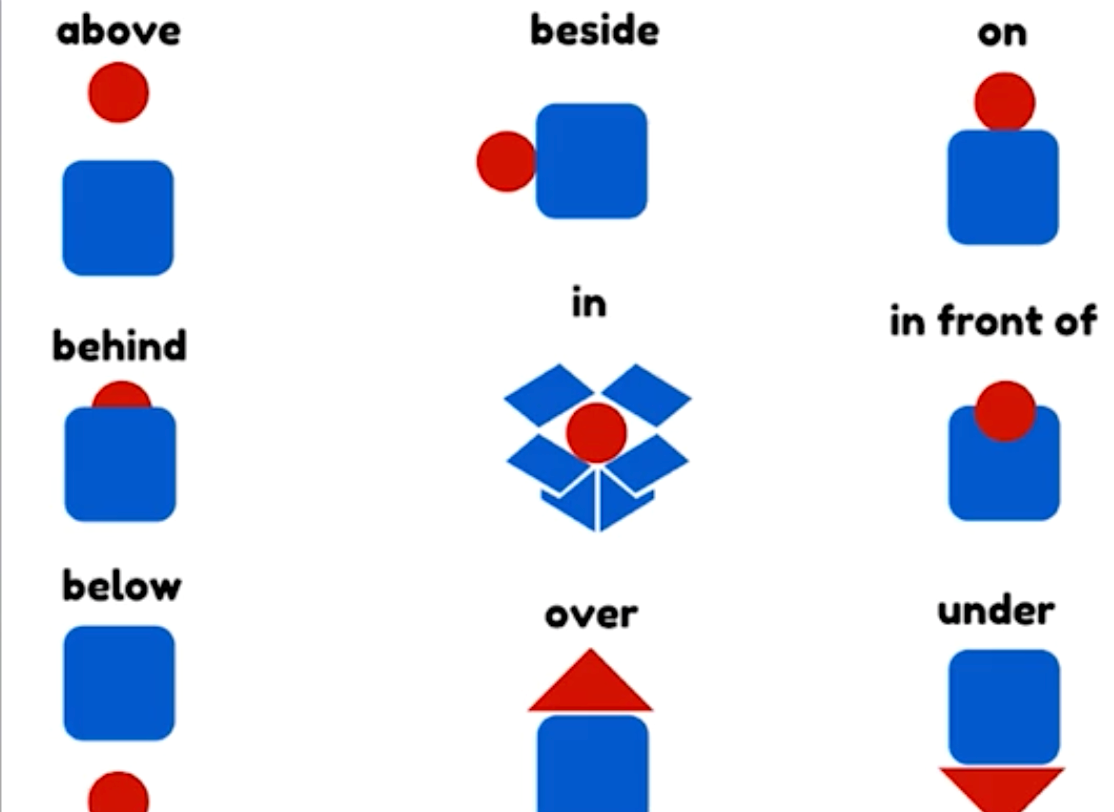
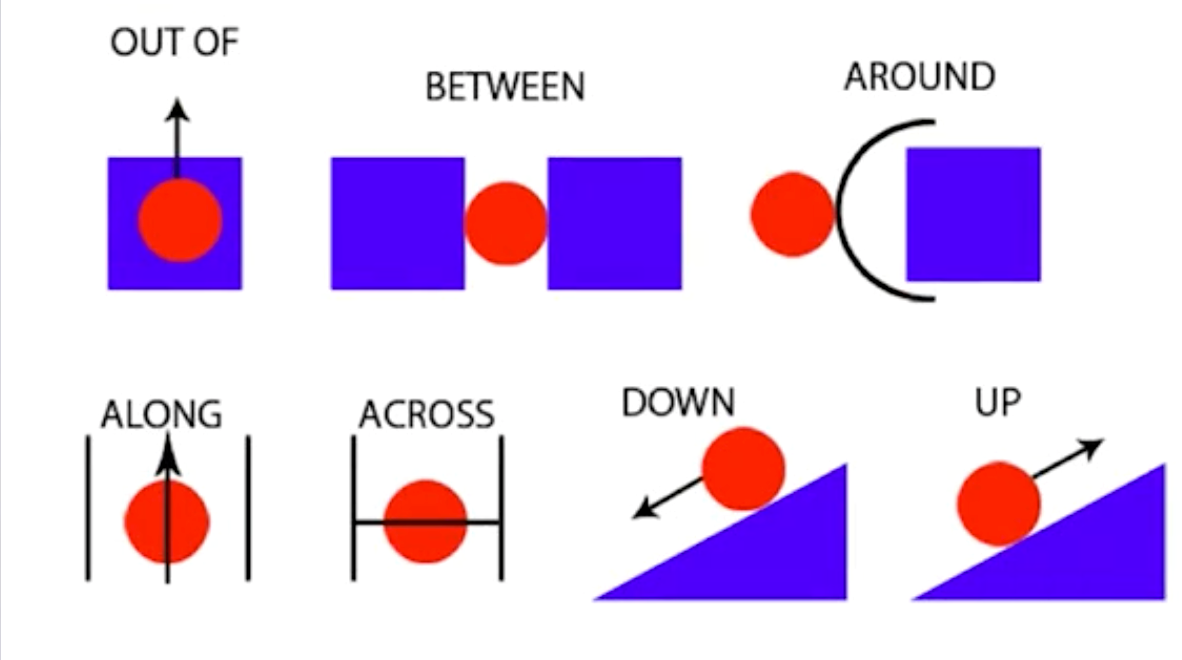
第二组:
out 到外面
between 在两个中间
around 围绕
along 沿着
across 横穿
down 向下
up 向上
第三组:
to 至
away from 远离
past 通过
into 进入,直到
onto 到...之上
off 离开
at 在
beneath 在...下面
beyong 在...以外
by 通过、由、以、将、靠、截至
inside 里边
near 靠近
opposite 对面
through 通过、经过
toward 往、对着
undernearth 在...下方
against 针对、对着
among 其中、之间、当中、在...之间
-
表示时间
after 以后
around 大约
at 在...时间
before 以前
between 在,,,时间之间
during 在...期间
from 从...开始
on 在...日期
until 直到...迄
in 在...时间段
since 从...开始
for 于
within 在...之内
at 时间点;年龄;一段时间
He starts work at 10 am,and finishes at 6:30 pm
他早上 10 点开始工作,下午 6.30 结束
Many children leave school at 16
许多孩子在 16 岁就离开学校
They leave the front-door light on at night
他们在晚上让前门的灯亮着
on 日期;(包括复数)
We meet on Tuesday
我们周二见面
We moved into this house on 25 October 1987
我们于 1987 年 10 月 25 日搬进这所房子
The office is closed on Fridays
办公室逢周五休息
The children stayed at their grandmother's on Friday night
周五晚上,孩子们住在祖母家
in 一天中的某个时间段,月,年,季节,长段时间
I'll come and see you in the morning for a cup of coffee,okay?
我早上来看你喝杯咖啡,好吗?
We usually go camping in July
我们通常在七月去露营
The house was built in 1835
这座房子建于 1835 年
The church was built in the 13th century
教堂建于 13 世纪
The garden is wonderful in the spring when all the flowers come out
春天百花齐放,花园美不胜收
The baby kept crying in the night
宝宝晚上一直哭
-
表示方向
at
for
on
to
in
into
onto
between
左右用 on,东南西北用 in
on your left
in the east
you’ll see the school on your left
你将在你的左边看到学校
onto 到 xxx 的上边
I don't like it when the cat jumps onto my lap
我不喜欢猫跳到我腿上
at 朝着
You don't have to shout at me
你不必对我大喊大叫
The older girls used to throw stones at me
年长的女孩过去常常向我扔石头
-
表示方式
by 通过
on 依靠、关于
in 用...的方式
like 如同...一样
with 伴随
I’ll send it by email
我将通过电子邮件发送
Tom should be on the six o’clock train
汤姆应该在六点钟的火车上
Her parents always talk to her in German
她的父母总是用德语和她说话
I don’t like tea with milk
我不喜欢茶里放牛奶
方法 2:固定搭配——查阅朗文词典、牛津词典
-
一个特别的介词 to
-
作为介词
介词 + 名词/V ing/句子
介词 + 名词
Does he want to come to the park with us ?
他想和我们一起去公园吗?
介词 + V ing
I look forward to hearing from you
我期待您的回音
-
用作不定式
I need to leave early today —— need to do something
我今天需要早点离开
this delicious dessert is easy to make
这种美味的甜点很容易做
We tried to explain
我们试图解释
介词结构用作表语
The apple on the table 短语
The apple is on the table 句子 主系表
梳理一下
太阳升起
The sun rises
太阳每天从东方升起
The sun rises in the east in the morning
都在句尾:地点>时间
注意介词结构的位置
穿着红色大衣的女士正走向我
The lady in a red coat is coming toward me
穿着红色大衣的女士正沿街而下走向我
The lady in a red coat is walking down the street and coming toward me
穿着红色大衣的女士此刻正沿街而下走向我
The lady in a red coat is walking down the street and coming toward me at this moment
易犯错误
I got a card from my sister this morning
今天早上我收到了姐姐寄来的卡片
❌ I got a card from my sister in this morning
I hope to go to Europe next summer
❌ I hope to go to Europe in next summer
我希望明年夏天去欧洲
At or on
We never go away at the New Year —— 新年期间 用 at
新年期间我们从未离开
On New Year's Day,the whole family gets togeter —— 具体到某一天 用 on
元旦,全家团聚
In or on ?
I always work best in the morning —— 早上期间 用 in
我总是在早上(期间)工作得最好
It happened on a beautiful summer's evening —— 具体到某一天 用 on
它发生在一个美丽的夏日傍晚
At or in ?
It’s not safe to travel at night —— 没有冠词
晚上出行不安全
I was awake in the night,thinking about all the things that have happened —— 有冠词
我在晚上醒来,想着发生的一切
对话应用 1
A: Hi,Tom.Are you free next Monday?Let's go to see a movie
嗨,汤姆,你下周一有空吗?我们去看电影吧
B: I have to eat dinner with my family
我必须和家人一起吃晚饭
A: We can watch the last show.I think it starts at 9:45 ( fifteen to ten )pm
我们可以看最后一场演出。我想它是在晚上 9 点 45 分开始
B: That would be great
那很好啊
A: What time can you be at the theater by
你什么时候可以在剧院
B: I can be there by 9:15 ( fifteen past nine )pm
我能在 9:15 分前到
对话应用 2
A: Hello,this is Doctor watson’s clinic. How can I help you.
你好,这里是华生医生的诊所。我怎么帮你。
B: Hello,this is Tom Black. I’d like to make an appointment.
你好,我是汤姆·布莱克。我想要预约
A: OK,Mr Black.How about Tuesday at half past three (3:30)?
好的,布莱克先生,星期二三点半怎么样
B: I’m busy all day on Tuesday.Is Friday OK?
星期二我全天都很忙,星期五可以吗
A: Well,the doctor can see you in the morning at half past nine(9:30)
嗯,医生可以在早上九点半见你
B: Can you give me the directions?
你能给我指个方向吗?
A: We are at 143 Peach Drive
我们在 143 Peach Drive
介词中的难点-of
-
表示所有格,...的
A of B 结构 ——> B 的 A 名词类
The color of his tie matches his suit
Can’t you throw out that old bike of Tom’s
The policeman is a friend of mine
She’s a friend of my father’s
I met another boyfriend of Lucy’s yesterday
My work is no business of yours
常见疑问:
下面两种写法都可以
She’s a friend of my father
She’s a friend of my father’s
需要用代词
She’s a friend of mine
She's a friend of me ❌
‘s常用于人、动物、组织、国家。of没有太多要求She’s my father’s friend
She’s a friend of my father’s
没有生命的对象一般用 of
The door of the building is open —— 常用
The building’s door is open —— 不常用
周杰伦的一首歌,介词用 by 而不是 of
a song by Jay Chou ✅
a song of Jay Chou ❌
-
表示数量
a cup of coffee 一杯咖啡
a bunch of bananas 一串香蕉
several bags of sugar 几包糖
millions of dollars 百万美元
不太知道数量是多少,可以用固定搭配
Some of my best friends are computer scientists
Most of the new workers in the country are from Turkey
All of us are hoping for good news
-
固定搭配
He’s always been frightend of spiders
Have you ever heared of the poet T.S. Eliot
He died of a heart attack
-
难点
The 2003 invasion of Iraq lasted from 20th March to 1st May 2003
2003 年那次入侵伊拉克,是从 2000 年三月开始, 2003 年五月结束
The financial investment of the company is buying real estate
该公司的金融投资是买房产
The financial investment of the company cost most of my money
对这家公司的金融投资花掉了我大部分的钱
对话应用
A: Would you like an appetizer?
你想要开胃菜吗
B: Yes,I’d like a bowl of chicken soup,please.Are there any specials going on?
是的,我想要一碗鸡汤。今天有哪些特色菜
A: Today’s special is steak
今天的特色是牛排
B: I’ll have the special of today,please
我要今天的特色菜,拜托
A: How would you like it cooked
你想要它如何烹饪
B: Medium rare
四分熟
A: Which sauce would you like to match your steak?
你想用那种酱汁来搭配你的牛排
B: Thank you. I prefer the original taste of the steak
谢谢,我更喜欢牛排的原汁原味
连词[conj]
连接单词、短语和句子
there are seats outside but some people don’t like sitting outdoors.
五大基本句型
主谓宾
例句:
I have a book
主语:I —— 主要用来发出动作
谓语:have —— 主要用来表示动作。其中 have 是及物动词,后面需要跟着某些物。
宾语:a book —— 主要用来承受动作
举例:
He drives a van
主谓
例句:
I drive
I:主语
drive:不及物动词
举例:
He smiled sweetly
I can’t wait
主系表
I am a girl
I:主语
am:系动词
a girl:表语(名词)
系统词分两种:be 动词和感官动词
- be 动词:is、am、are
- 感官动词:look、sound、smell、taste、feel、seem、appear、become、turn、remain
表语可以用名词或者形容词
主谓双宾
I made you a cake
I give you a book
主语:I
谓语:made
宾语:you 间接宾语
宾语:a cake 直接宾语
该句型常用的单词:
bet、get、make、play、sell、teach、bring、give、offer、post、send、tell、build、kick、owe、promise、show、throw、buy、leave、pass、read、sing、wish、cost、lend、pay、refuse、take、write
主谓宾宾补
My mother calls me Juli
主语:my mother
谓语:calls
宾语:me
宾语补足语:Juli
例句:
Let’s paint it blue
You make me nervous
双宾和宾补的区别
I made you a cake —— you 和 cake 是两种不同的对象
My mother calls me Juli —— me 和 Juli 是相等的
规律
主语:都是名词类(包括代词)。放前面
谓语:都是动词类(包括系动词)。放到主语后面
表语:名词类或者形容词类。放到系动词后面
宾语:名词类。放到谓语后面
补语:名词或者形容词类。放到宾语后面
对话应用
A:Hi,I’m Tom (主系表)
B:Hi,I’m Juliana(主系表), you can call me Juli (主谓宾宾补)
A:where are you from,Juli? (主系表)
B:I’m from China (主系表)
A:That’s cool(主系表).what do you do (主谓宾)
B:I’m a student(主系表),But I have a part-time job(主谓宾)
A:what is it?(主系表)
B:I teach kids math(主谓双宾)
特殊句型 there be
there be 句型多用于某物存在于某地
我的紧身裤上面有个洞
there is a hole in my tights
Thre = a hole 具有指代的功能
there is
there is 用来指代单数/不可数,还可以指代不定代词。
there is 可以简写为 there's
-
指代单数/不可数
There is one exception 有一个例外(单数)
There is ice on the lake 湖上有冰(不可数)
There is a lot of noise in the street 街道上有很多噪音(不可数)
-
不定代词
There is something wrong
Is there anybody at home?
不定代词:something、anything、nothing 等
there are
there are用来指代复数。
There are a lot of problems。
There are some people in the room 。(people 是单复数同行的)
there be 其他句型
第三人称单数
there exists/remains/seems ...
什么都不存在
There exists nothing
看起来有一个难题
There seems to be a problem
复数
看起来有很多难题
There seem to be a lot of problems
依然有一些问题
There remain several questions
there seem(s) 经常和 to be 搭配。there seems to be...是固定搭配
there 词性比较
there 还有一种用途——用来作副词表示:那儿
你能把那儿的盐递给我吗
Can you pass the salt there
这里的 there 是那儿的意思,
特殊句型中的 there 则是用来指代某种东西。
There is a hole in my tights
这里的 there 则用来代指——a hole
对话
A: There is nothing to do . I’m really bored
B: I got a brain teaser. Do you want to try?
A: Why not
B: What is the longest word in the dictionary?
A: Er... Can I google it?
B: No
A: Alright,I don’t know.
B: Smiles.Because there is a mile between each “s”.
如何 say no
negative sentences(否定句)
五大基本句型的否定
-
主谓宾 —— 用 not 否掉谓语
I don’t like apple ————形成助动词(do)
结构:助动词+动词原型
第一人称
I have a book
I don’t have a book
第三人称
She has a book
She doesn’t have a book
过去时
I had a book
我曾有一本书
I didn’t have a book
我不曾有一本书
过去完成时
I have had a book
我已经有一本书了
I haven’t had a book
我还没有一本书
-
主谓 —— 用 not 否掉谓语
第一人称
I drive
I don’t drive
第三人称
She drives
She doesn’t drive
过去时
I drove
I didn’t drive
过去完成时
I have driven for 10 years
I haven’t driven for 10 years
-
主谓双宾 —— 用 not 否掉谓语
第一人称
I make you a cake
I don’t make you a cake
第三人称
She makes you a cake
She doesn’t make you a cake
过去时
I made you a cake
I didn’t make you a cake
过去完成时
I have made you a cake
I haven’t made you a cake
-
主谓宾宾补
My mother calls me Juli
My mother doesn’t call me Juli
My mother called me Juli
My mother didn’t call me Juli
-
主系表
am 的否定
I am not a girl
I am not beautiful
is 的否定
isn’t 或者 is not
The supper is ready
The supper is not ready
The supper isn’t ready
The supper was ready
The supper wasn’t ready
are 的否定
are not 或者 aren't
They are from Belgium
They are not from Belgium
They aren’t from Belgium
They were from Belgium
They weren’t from Belgium
there be 的否定
there is ice on the lake
there isn’t ice on the lake
there are some problems —— some 用于肯定句或者陈述句
there aren’t any problems —— any 用于否定句或者疑问句
there exists something —— something 用于肯定句
there doesn’t exist anything —— anything 用于否定句或者疑问句
not at all 完全不
She was not at all happy with the result
她对结果一点都不开心
There’s nothing at all left in the fridge —— leave 的被动形式 be left
冰箱里什么都没被留下
There’s nothing left at all in the fridge
冰箱里什么都没被留下
We had no rain at all this summer
今年夏天我们这根本没下雨
no 和 not 的区别
I do not have a book
I have no books
I don’t have any books
总结:no 加名词 not 用于其他
例句 1:
Do you go cycling all year round?
你一年四季都骑车吗
not in the winter
冬天不骑
例句 2:
no snow in the winter
例外:
I am not a girl ✅
I am no girl ❌
例句 4:
It’s no secret that we are interested
我们感兴趣的已经不是什么秘密了
It’s not a secret that we are interested
我们感兴趣的已经不是什么秘密了
否定副词
never 从来不
seldom 不常
hardly 几乎不
He’s never been to Australia
他从来没去过澳大利亚
He hardly smiles
他几乎不笑
I seldom go there —— I don’t go there very often
我不常去那
对话应用
A: Tom,how is your chicken?
汤姆,你的鸡肉怎么样?
B: My chicken tastes all right,but it is pretty dry.How is your fish?
我的鸡肉尝起来还可以。但是确实很干,你的鱼怎么样
A: My fish is pretty dry too
我的鱼也很干
B: It’s almost as if this food has been sitting a little too long.It doesn’t seen fresh
这几乎就像这些食物放久了一样,它看起来不新鲜
A: Yes. it seems that way to me also
是的,在我看来也是这样
B: How about your vagetables ?
你的蔬菜如何
A: My vagetables are very soggy
我的蔬菜非常湿
B: Mine are the same way.It seems like they’re been over cooked.
我的也是这样。它看起来像是被过度烹饪了
A: I don’t usually complain.But I think that we should mention this to the waiter.
我通常不抱怨,但是我想我们应该向服务员提到这一点
一般疑问句
主谓宾
Do 开头做助动词
一般提问
You have a book —— Do you have a book
第三人称
She has a book —— Does she have a book
过去时
You had a book —— Did you have a book
现在完成时
I have had a book —— Have you had a book
主谓
同上
Do you drive
Does she drive
Did she drive
has she driven
主谓宾宾补
Does your mother call you Juli
Did your mother call you Juli
has your mother called you Juli
主谓双宾
you always make me cakes
do you always make me cakes
Does she make you cakes
Did she make you cakes
has She mad you cakes
主系表
I am right —— am I right?
They are from Belgium —— Are they from Belgium
She is your sister —— Is she your sister
(感官动词 —— 系动词)
She looks beautiful —— Does she look beautiful
there be 句型
There is ice on the lake —— Is there ice on the lake
There exists something —— does there exist anything
涉及到其他时态、语态、情态的提问
The car is being repaired —— Is the car being repaired
We should be more positive —— Should we be more positive
You have been working for decades —— Have you been working for decades (现在完成进行时)
一般疑问句的回答
Has she made you a cake
Yes she has == Yeah
No she hasn’t == Nope
Hey,Tom. did you go fishing today?
I did,I went with the boys
Do you know Tom?
Yes,I do.we have known each other for years
Do you have the Coldplay latest album
I’m afraid we’ve just sold the last one
口语中的省略
Is anyone absent? Anyone absent?
Is anyone listening? Anyone listening?
Do you understand me? You understand me?
Did you call tom last night? You call Tom last night?
对话应用
A: Hi, are you Mia?
你好,你是 Mia 吗
B: I am Mia. You must Tom
我是 Mia,你一定是 Tom
A: Yes, that’s me
对,就是我
B: It’s so good to finally meet you . Karen has told me so much about you
太好了终于见到你了。Karen 告诉了我很多关于你的事
A: I hope that she had good things to say about me
我希望她对我能有些好话
B: She had only good things to say. Did you have trouble finding me ?
她只有好话要说。 你找我有困难吗
A: Well. How many beautiful women in a red dress are there by the fountain?
有多少红衣美女在喷泉旁边呢
B: Thank you for the compliment
谢谢夸奖
特殊疑问句
特殊疑问句就是带有特殊疑问词的疑问句:
what 什么
when 何时
who 谁
whom 谁(用来对宾语做提问)
which 哪个
whose 谁的
why 为什么
how 如何(表示程度)
what kind 哪一种
what time 什么时候
how many 多少
how much 多少
how long 多久
how often 多常
how far 多远
how old 几岁
针对定语-主语进行提问
Tom bought this
—— Who bought this
Bill has the money
—— who has the money
—— who have the money (多个人的情况下用 have。你的主观判断有多个人时使用)
The car hit (过去式) the dog
—— What hit the dog
Home is my favorit place
—— Where is your favorit place
Today is my birthday
—— When is your birthday
The black table is broken
—— Which table is broken
—— What is broken
Your phone is ringing
—— what is ringing
—— whose phone is ringing
总结: 对于定语—主语提问,用疑问词替换
针对定语-宾语进行提问
- 句首加疑问词
- 单词发生变化
The girl ate an apple
—— What did the girl eat
Tom saw the president
—— Who did Tom see (也可以用 Whom)
Tom drives Bill’s car
—— What does Tom drive
—— Whose car does Tom drive
The baseball broke the back window
—— Which window did the baseball break
总结:疑问句 + do/does/did + 剩下的部分
针对定语-表语进行提问
换单词及顺序
My name is Bill
—— What’s your name
He is the president
—— Who is he
That’s Tom’s dog
—— Whose dog is that
I’m good
—— How are you
The color is white
—— What is the color
You look great
—— How do I look
It smells delicious
—— How does it smell
对话应用
Interviewer:What are your previous jobs?
你之前都做过什么工作
Interviewee:I was a Computer Engineer
我是一个计算机工程师
Interviewer:How do you deal with high-stress situations
你如何应对压力大的情况
Interviewee:I actually work better under pressure and I’ve found that I enjoy working in a challenging environment
实际上,我在压力下工作得更好,而且我发现我喜欢在充满挑战的环境中工作
Interviewer:What interests you about this job?
你对这份工作有什么兴趣
Interviewee:I am interested in this Job because I am extremely interested in and skilled at,learning and excelling at new technologies
我对这份工作很感兴趣,因为我对新技术非常感兴趣和熟练,学习和擅长新技术
对定语-间宾/宾补进行提问
My mother calls me Juli
—— What does your mother call you
You make him sad
—— What did I do
这一部分不建议用规则记忆
对谓语进行提问
What does she usually do after work
She goes jogging
对状语:副词、介词结构、不定式等提问
疑问词有:when/where/how/what time...
Mary is very beautiful
—— How beautiful is Mary ?
—— How beautiful Mary is !
Bill passed the test by studying hard
—— How did Bill passed the test
The keys are on the table
—— Where are the keys
Tom’s appointment was at four o’clock
—— When was Tom’s appointment
Mary is thin because she went on a diet
—— Why is Mary thin
I study English every day
—— How often do you study English
常用提问
What’s your name
where are you from / where do you come from
what’s your address
where do you live
what’s your phone number
how old are you
when were you born
where were you born
Are you married / what’s your marital status
what do you do
where did you go
what did you do
have you got any children
主谓一致原则
主谓一致原则就是主语和谓语保持一致的原则。
I eat breakfast
she eats beakfast
主语:单数(she、Bill、car ...)/不可数的情况下
谓语:is,goes,has ...等单数形式
Bill goes to work on weekdays
Bill 在工作日去上班
The car is in the underground garage
轿车在地下停车库
The list of items is on the desk
清单列表在桌子上
A bouquet of lily lends color and fragrance to the room
一束百合为房间增添色彩和香气
原则一
主语和谓语被隔开
Bill,as a doctor,goes to work on weekdays.
Bill 作为一个医生,工作日上班
She ,however,is still sad
然而,她还是很难过
a lot , a majority,some,all 等受主语影响
A lot of people were hurt
很多人受伤
A lot of money was spent on it
需要钱被花在它上面
原则二
主语是单数且由 or,either..or,neither..nor 连接
谓语:用单数
My aunt or my uncle is arriving by train today
我的阿姨和我的叔叔今天坐火车到
Neither Oleg's mother nor his father speaks English
Oleg 的爸爸妈妈两个都不会说英语
关于 neither...nor
用法 1:neither 名词 nor 名词
Neither Oleg's mother nor his father speaks English
用法 2:neither 动词 nor 动词
Most of them neither konw nor care how it works
他们中大部分既不知道也不关心它是如何运行的
用法 3:neither 形容词 nor 形容词
The equipment is neither accurate nor safe
这个设备既不精确也不安全
原则 3
主语:单复数 混合且由 or,either..or,neither..nor 连接
谓语:就近原则
Neither Peter nor his parents were aware of this
彼得和他的父母都没有意识到这一点
Either you or they are to clean up the mess
要不是你,要不他们,来打扫这残局
关于原则 3
Neither she,my friends,nor I am going to the park (不好)
Neither she, I, nor my friends are going to the park (修改成这样)
She,my friends and I are going to the park
原则 4
主语:用 and 连接的名词
谓语:用复数形式
A car and a bike are my means of transportation
汽车和自行车是我的交通工具
The bread and the butter are on sale
面包和黄油在售
原则 4 的例外:
如果 and 连接的单词是一个整体
The bed and breakfast is great
床和早餐都很棒(这里的床和早餐是欧洲酒店共同的整体服务)
The bread and butter is served for beakfast
供应面包和黄油作为早餐
原则 5
主语:单从意思上看是一个整体概念
谓语:单数
Ten dollars is a high price
十美元太贵了
Three miles is too far
三英里太远了
原则 6
主语:既可以看成复数也可以看成一个整体
谓语:都可以
All of my family has arrived/have arrived
我全家都到了
A third of the population is unemployed/are unemployed
三分之一失业人口
The staff is talking about their new manager
The staff are talking about their new manager
The staff members ate talking about their new manager
员工们正在谈论他们的新经理
注意时态
主谓一致原则需要注意时态的影响:
I went to work
She went to work
I have done my homework
she has done her homework
对话应用
A: Hi Dave,how are you ?Oh,why do you look so worried
Hi,Dave,你怎么样,为什么你看起来很担忧?
B: Yeah,I’m a little worried about pollution
是的,我有一点担心污染
A: What do you think is going to happen?
你觉得会发生什么?
B: Pollution is a serious problem
污染是一个严重的问题
A: Absolutely! Besides,problems around climate change are made worse by environment pollution
当然!此外,环境污染使围绕气候变化的问题更加严重
B: I think some plants and animals are likely to become extinct
我觉得有一些植物和动物可能会灭绝
A: Once more people are aware of the dangers and we work together,we can think of solutions
一旦人们意识到这个危险,我们携手一起,一定能想出解决方案的。
情态动词
情态助动词
can,could,may,will,might,would,shall,should,must,ought
用于增添意思,例如对某事有把握或者必须或者允许做某事
情态助动词的规则
-
第三人称不加 s
She may konw his address
-
疑问句和否定句的形式
Can you swim ?
Do you can swimHe shouldn't do that
-
加动词原型
I must water the flowers
must to例外:
ought to do sth 应该去做什么
You really ought to quit smoking
你真的应该戒烟
-
没有 -ing、to do、-ed 三种形式
mayed、maying、to may -
would、could、should、might 有时会作 wil、can、shall、may 的过去时
我想能滑冰
I want to can skateI want to be able to skate
那些日子里,人们要辛勤工作
People had to work hard in those days
People musted work...
情态动词的使用
-
表示确定程度:确定、有可能、很有可能、不可能
shall、will、won't、must、can't、should、ought to、may、might、could
-
表示义务:必须、能够、允许
must、have to、need to、should、ought to、needn't、don't、need to、don't have to
第一组:will、won’t、would
I’ll give you a call at about 6 o’clock —— 将来时
I think they will be away in January again —— 推测
I think i’ll have some orange juice,actually —— 决定
We’ll always love you —— 承诺
This tastes good,will you give me the recipe —— 要求
Will you be quiet,please —— 命令
I won't have a party —— 确定
Would you close that door —— 请求
I’d advise you to keep working on you grammar —— 建议
I’d say you are about 40 —— 推测
第二组:shall、shan’t、should、shouldn’t
shall I carry your bag? —— 提议
shall I call again on Tuesday? —— 建议
What shall we do with this? —— 寻求建议
We shall remember this day forever —— 意图
This door shall be kept closed at all times —— 命令
shall you ❌ 一般不这么用
注意,提问用 shall,回答要用 should
What shall we do with this?
In my opinion, We should
shallbook another hotel.在我看来,我们应该定另外的酒店
I shan’t be home tomorrow night (不常用)
明晚我不在家
There should be more public hospitals —— 应该
应该有更多的公立医院
You should tell him what you think —— 建议
你应该告诉他你是怎么想的
There should be a very big crowd at the party. Mary has so many friends —— 应该
派对上应该有一大伙人,Mary 有那么多的朋友
You shouldn’t smoke in front of the children —— 不应该
你不应该在孩子面前抽烟
A: I got you something from Texas. A cowboy hat.
B: Oh,Ken, You shouldn’t have ! —— 没必要这么做(客气)
我从得克萨斯州给你买了礼物,一顶牛仔帽
噢,Ken,你不用买啦
第三组:must、mustn't
He’s so small.He must be no more than four years old —— 推断
他好小,肯定不到 4 岁
A: She lives in Thailand now.
B: That must be amazing —— 口语,表达情感
她现在住在泰国
那肯定很棒
I must talk to you about the new project —— 必须
我必须跟你说下新项目的事
I must try harder next time —— 必须
下次我要更努力
注意:过去必须做某事..
Last year,teachers had to make a report on each child every week
Last year,teacher must make a report❌去年,每周老师都得为每个孩子写一个总结报告
You must not park outside the entrance —— 规定、法律
你不能把车停到入口的地方
All passengers must present valid photo identification at check-in for all flights —— 公共标志
所有航班的乘客在登机手续办理处必须出示有效的带有照片的身份证明
You must come and see us soon —— 邀请
你一定要早点来看我们
Must you keep playing that terrible music ? —— 指责
你一定要放这么可怕的音乐吗
must VS have to/have got to
I must buy some new clothes.Mine look so old —— 内心觉得必须做什么
我必须买一些新衣服了,我的看起来很久
I**‘ve got to** buy some new clothes. I’m starting a new job as a teacher and we have to wear formal clothes —— 外部要求不得不这么做
我不得不去买一些新衣服了,我的新工作是一个老师,要求我们必须穿正装。
mustn’t VS don’t have to/haven’t got to
You must not give my credit card details to anyone。必须不
你不能把我的信用卡信息给任何人
You don't have to tell anyone. I will email everyone。—— 没必要
你没必要告诉其他人,我会发邮件的
第四组:may、may not
May we use your phone? —— 询问许可
我能用你的手机吗?
Yes, you may / No,you may not
嗯,可以的 / 不,不可以
注意:
May you give me a cup of coffee ❌ —— may 不能用于 you
Could you give me a cup of coffee ✅
May I have a cup if coffee ✅
The economy may go up or down in the next year. —— 可能
接下来的一年,经济可能变好或变差
I may be wrong but I am going to tell the police about it —— 可能
我可能错了,但是我会告诉警察一切
We may not have enough infomation at the moment —— 可能
我们现在掌握的信息可能不够
第五组:might、mightn’t (语气比 may 弱)
I might go to Japan for a month to study Japanese
我可能会去日本一个月,学习日语
Might I ask your name? —— 非常礼貌,但很少用
请问您的名字是?
You might like to try one of our wonderful desserts —— 建议
你可以尝一下我们这些非常好的甜点心
There might not be anyone in the house.
房子里面可能没有一个人吧
第六组:can、can’t
Can I take Daisy for a walk —— 允许
我能够带 Daisy 出去散步吗
You can't park there —— 不允许
你不能把车停那
I can see her coming down the road now —— 能够
我看到她现在走过来了
Fireworks can frighten pets —— 会
烟花会吓到宠物
对猜测进行回答
A: who owns this blue coat? It must be yours
这件蓝色大衣是谁的?肯定是你的
B: It can’t be mine
不可能是我的
Can’t you stop making that awful noise —— 责备
你能停掉那可怕的噪音吗
第七组:could、couldn’t 比 can 语气要弱一点
It could be blue —— 可能
有可能是蓝色的
The storm could get worse
风暴可能会越来越大
He couldn’t lift that.It’s soo heavy —— 能够
他举不起来那个,太重了
A: Could I leave early today?
B: Yes,you can / No,you can’t ✅
Yes,you could / No,you couldn’t ❌
第八组:need to、needn’t to/don’t need to、have to、don’t have to、ought to
We need to win this games to get into the final. ——责任感
我们需要赢了这场比赛才能进决赛
I don’t need to do it now. I’ll do it later —— 责任感
我不需要现在做,我等会再做
I have to go up the hospital twice a week —— 必要
我每周得去医院两次
I don’t have to do it now.I’ll do it later —— 没必要
我没必要现在做,我等会再做
The traffic isn’t heavy.We ought to be there in an hour —— 推测
这交通不太严重,我们应该一小时内到
Children ought to look after their parents in old age —— 责任
父母老了以后,孩子应该照顾他们的父母
对话应用
A: Could you help me?
你能帮帮我吗
B: What’s wrong
怎么了
A: I think I’m lost
我想我迷路了
B: Where are you going?
你要去哪
A: I need to find the movie theater
我需要找到电影院
B: You’re not sure where it is?
你不确定它在哪吗
A: I really don’t know
我真的不知道
B: You do know where the mall is ? right?
那你知道商场在哪吗
A: I know exactly where that is
我准确知道
B: There’s a movie theater inside the mall
商场里面就有一家电影院
numbers
数字
例如:one、two、three ...
用法 1:表示数字
用法 2:表示数量,用于名词前
one boy / one of my friends
My two best friends are Amy and Louise
我的两个最好的朋友叫 Amy 和 Louise
Three of his colleagues were sacked yesterday
昨天他的三个同事被解雇了
two cups of water
两杯水
用法 3:特殊的词组
The children arrived in twos and threes
孩子们三三两两地到了
large numbers
hundred、thousand、million、billion...
百、千、百万、十亿
放在名词前,表示数量
The city is about a hundred kilometers from the capital
这座城市离首都大概 100 公里
用法 1:表示具体数额,复数没有 s。例如 100,2000
There were about two hundred people at the meeting
当时大概有 200 个人在会议上
用法 2:表示抽象数额,有 s,例如上百,上千
hundreds/thousands/millions ...+ of + 名词
It’s happened hundreds of times -
这发生上百次了
用法 3:用阿拉伯数字表示时的习惯
The car costs $1,250
这辆车花费了 1,250 美元
A total of $5,000,000 was spent on the project
一共有 5 百万花在这个项目上
一个逗号表示 thousand,两个逗号表示 million
序数词
first、second、third 等序数词
序数词前有冠词或所有格
This was the fifth science exam
这是第五次科学考试
It's her twenty-first birthday
这是她第二十一个生日
用法 1:置于名词前
用法 2:当做名词使用
All three singers in the competition were excellent but I’m voting for the third
比赛的三个歌手都很棒,不过我要投票给第三位
用法 3:当做副词使用
First,let me introduce you to my brother Jack
首先,让我把你介绍给我的兄弟 Jack
He came tenth in the New York marathon
在纽约的马拉松上,他来到了第十位
对话应用
A: This car is exactly what I want !
这辆车就是我想要的
B: I am glad that you like it.I’ve had good experiences with this car.
我很高兴你喜欢它,我以前开这车的时候感觉很好
A: So,how much you want for the car
所以,多少钱呢?
B: Well,the price in the paper was five thousand dollars
我写的价格是 5,000 美元
A: Yes,I know,but I think that might be a little high for this car.
是的,我知道,但是我想这个价格对这辆车来说有一点贵
B: I might be able to come down a little on the price
我能够降价一点点
A: How about selling the car for four thousand?
四千美元可以吗
B: No,that’s way less than I could accept.However,I could accept forty-five hundred
不行,那比我能接受的价格少多了。不过四千五可以
A: That sounds fair to me
这听起来很公平
B: It’s a deal then,Thank you
那就这么说定了,谢谢
数字整理
一般现在时
present tense:simple
时态分:
- 过去:一般 进行 完成 完成进行
- 现在:一般 进行 完成 完成进行
- 将来:一般 进行 完成 完成进行
一般过去时:
I broke a window yesterday
我昨天打破了一扇窗户
一般现在时:
My parants live in London now
我的父母现在住在伦敦
一般将来:
I will go to Paris this summer vacation
我暑假会去巴黎
时态学习的重点:
- 句子谓语部分的变化形式
- 每一个时态的用法和表达的意思
- 和时态搭配的时间状语
形式
一般现在时态:
I work every day
She works every day
-Does she work every day
-Where does she work
-She doesn’t work
every day 是时间状语(副词),everyday 是形容词或名词。
用法
永久的情况:真理、常识、事实等
Ten times ten that makes one hundred
十乘以十等于一百
It always rains here in November
这儿 11 月经常下雨
Birds do not like milk
鸟不喜欢喝牛奶
New York is a small city
纽约很小
It is not important that this fact is untrue
事实是不是真实的不重要
长期的情况:习惯、一般情况
I really love my job
我真的很爱我的工作
Mary plays tennis every Wednesday
Mary 每周三都要去打网球
He never forgets his wallet
他从不忘记带钱包
长期的情况:计划中的事情
The train leaves at 6 PM
The party starts at 8 o’clock
When do we board the plane?
当下的情况:动词一般是延续的
I am here now
我现在在这
He needs help right now
他现在需要帮助
Do you have your passport with you?
你带了护照吗
当下的情况:即时反应
Do you think that meat is ok to eat?It doesn’t smell very good
你觉得这肉能吃吗?闻起来味道不太对
Where does it hurt
伤哪儿啦?
I don’t like the color.I think I look terrible
我不喜欢这个颜色,我穿着很难看
It seems a bit quiet in here. Where is everyone?
演讲、解说、故事中的现在时态
In Act I,Hamlet sees the ghost of his father. The ghost tells him...
第一幕:哈姆雷特看到了他父亲的灵魂。这个灵魂告诉他